In a world saturated with visuals, features, and constant stimulation, doing less has become one of the most difficult decisions a designer can make. Yet, it is often the most impactful. Restraint is not about limitation. It is about intention, clarity, and control.
When everything competes, nothing stands out
Modern design often falls into the trap of excess. More colors, more features, more animations, more elements competing for attention. The assumption is simple: more will create more impact.
In reality, the opposite is often true.
When everything demands attention, nothing truly captures it. Visual noise dilutes meaning, and users are left searching for clarity in an environment that feels overwhelming. The strongest designs are not the busiest ones—they are the ones that know what to emphasize and what to remove.
Restraint begins with the ability to decide what does not belong.
Clarity is a competitive advantage
Clear design is not just an aesthetic choice—it is a strategic one.
Brands that communicate one idea effectively are remembered. Those that try to communicate everything at once are often ignored. In a landscape where attention is limited, clarity becomes a form of differentiation.
Restraint forces prioritization. It pushes designers to define a single message, a clear hierarchy, and a focused visual system. This clarity builds confidence. It allows users to understand instantly, without effort.
And in design, ease of understanding is one of the most valuable outcomes.
Design is an act of editing
Creating is often an expansive process. Ideas multiply, options grow, and possibilities widen. But good design does not come from accumulation—it comes from refinement.
Restraint transforms design into an act of editing.
It requires stepping back and asking difficult questions. Does this element serve a purpose? Does it improve understanding? Does it strengthen the message?
If the answer is no, it is removed.
This process is not about reducing effort. It is about increasing precision. Every element that remains carries more weight, more intention, and more impact.
Simplicity creates space for meaning
Space is one of the most underestimated tools in design.
It is often seen as emptiness, something to be filled. But in reality, space creates structure. It defines relationships between elements. It allows content to breathe and be understood.
Without space, there is no hierarchy. Without hierarchy, there is no clarity.
Simplicity is not about removing complexity entirely—it is about organizing it in a way that feels natural and effortless. It is about creating room for meaning to emerge.
Consistency strengthens restraint
Restraint does not end with individual decisions. It must be applied consistently across a system.
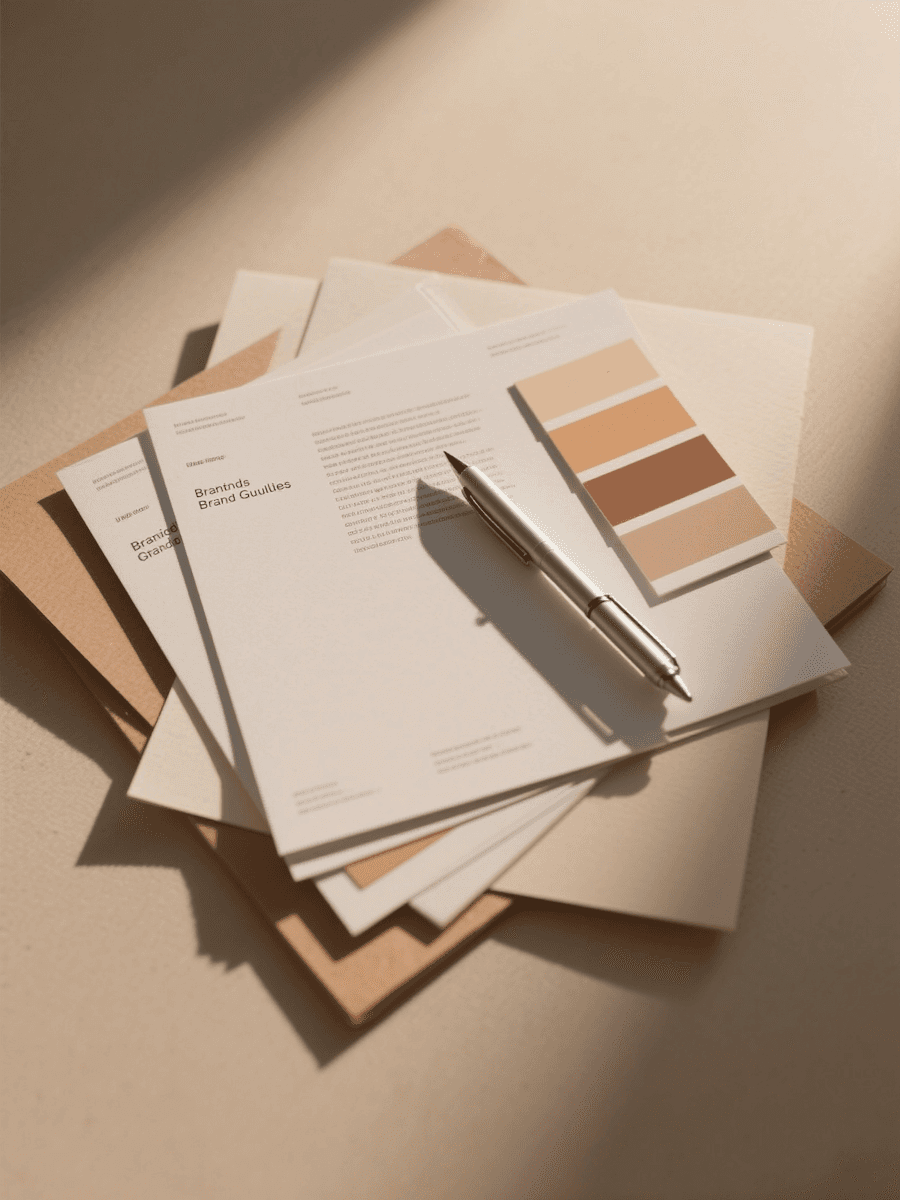
A limited color palette, a defined typography scale, a structured layout system—these are not restrictions. They are tools that reinforce clarity over time.
Consistency reduces the need for constant reinvention. It builds familiarity. It creates a sense of reliability and trust.
When restraint is applied consistently, design becomes stronger, not repetitive.
Restraint requires confidence
It is easy to add. It is much harder to stop.
Restraint requires confidence in decisions. It means trusting that what is left is enough. It means resisting the urge to fill every space or justify every choice with more elements.
This confidence is what separates strong design from average design.
It is not about showing everything that can be done. It is about showing only what matters.
Less, but better
Restraint is often misunderstood as doing less work. In reality, it demands more thinking, more discipline, and more intention.
It requires clarity of purpose and the ability to make deliberate choices.
In the end, the goal of design is not to impress with complexity, but to communicate with precision. When unnecessary elements are removed, what remains becomes clearer, stronger, and more memorable.
Less is not a limitation.
It is a decision to focus on what truly matters.